Disordered Eating vs. Dieting: Signs Your Relationship With Food Has Become a Problem (Even If It's Not an Eating Disorder)
A free resource provided by: Psychology House - Tampa, FL
Introduction
Dieting is a planned, flexible change in how you eat, usually with a specific goal and an end point. Disordered eating is a pattern of rigid food rules, guilt, and preoccupation that starts to shape your mood, your relationships, and your days. The difference is less about what you eat and more about how much power food has over you.
If you've ever wondered whether you're "just being healthy" or whether something has quietly tipped into a problem, you're in good company. Many people live in the gray area between the two, and most never mention it because it doesn't seem serious enough to bring up. But it doesn't have to be an eating disorder to be worth taking seriously.
This post will help you tell the difference, recognize the signs, and understand what support can look like.
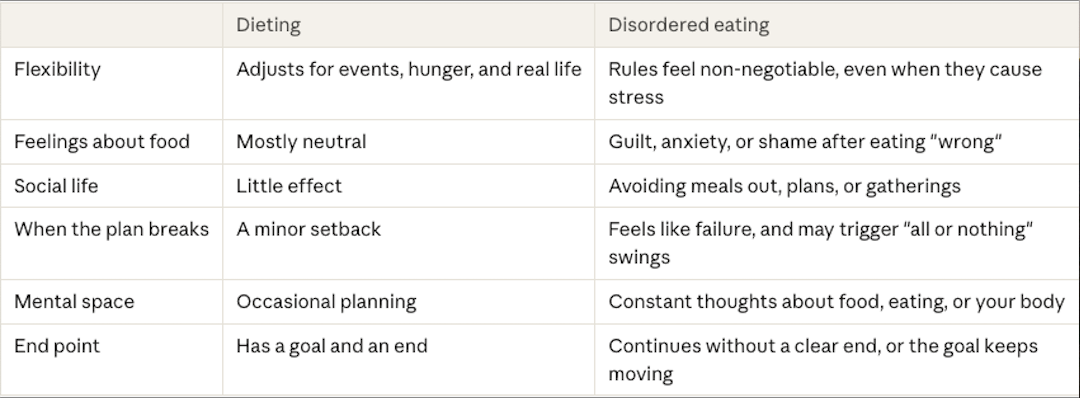
Dieting vs. disordered eating: what's the difference?
The two can look similar from the outside. The difference shows up in how flexible you are and how you feel around food.
Signs your relationship with food may have become a problem
No single sign tells the whole story. It's the pattern, and how much it costs you, that matters. You may notice:
Food guilt. You feel guilty, anxious, or ashamed after eating certain foods, or label foods and meals as "good" or "bad."
Rigid rules. You follow food rules you can't bend, even when they cause stress or get in the way of your life.
The binge-restrict cycle. Periods of tight control are followed by feeling out of control, then a return to strict rules to "make up for it."
Eating to cope. Food becomes the main way you manage stress, loneliness, boredom, or difficult emotions, and afterward you feel worse.
Skipping plans. You turn down dinners, trips, or social events because of what will be served or how you'll feel.
Constant mental chatter. A lot of your day goes to thinking about what you've eaten, what you'll eat, or how your body looks.
Moral weight. Your sense of self-worth rises and falls with how "well" you ate or exercised that day.
Body image that shapes your mood. How you feel about your body can decide how you feel about the whole day.
These patterns aren't limited to one kind of person. For some people, they show up as dieting and body dissatisfaction. For others, especially men, they can look like "clean eating," strict macros, or an exercise routine that has stopped feeling like a choice. If food rules have started to feel like a job you can't quit, that counts.
Why this often goes unnoticed
Disordered eating is easy to miss, including by the person living with it. Diet culture and "wellness" language reward many of the same behaviors that cause distress. Cutting out food groups can be praised as discipline. Tracking every bite can be called being mindful. Intense exercise can be called dedication.
Many people also assume that because they don't "look sick," or because they've never been told they have an eating disorder, their struggle doesn't count. So they wait, sometimes for years, and keep managing on their own.
You don't have to hit a breaking point to ask for support.
Disordered eating vs. an eating disorder
An eating disorder, such as anorexia, bulimia, or binge eating disorder, is a diagnosable mental health condition with specific criteria. Disordered eating is a broader term for unhealthy patterns around food and body image that may not meet those criteria but still affect your well-being.
The line between the two isn't always clear, and disordered eating can sometimes develop into an eating disorder. Only a qualified professional can tell you which applies, and you don't need to know in advance. Support is appropriate at any point along the way, with or without a diagnosis.
What support can look like
Therapy for disordered eating isn't about being handed a meal plan or told what to eat. It's a space to understand what your food rules are doing for you, and what they're costing you.
At Psychology House, therapy for disordered eating and body image with Dr. Alexandra Perrine focuses on moving from shame toward self-compassion, breaking the cycles of restricting, bingeing, and guilt, and rebuilding trust with food and with your body. Sessions start with a relaxed conversation about what you're noticing and what you'd like to change.
If it turns out you need a higher level of care, such as medical monitoring or a more intensive program, we'll help you find the right referral.
When to reach out
Consider talking with someone if food or your body takes up more mental space than you want, if your food rules cause distress, or if you notice the patterns above getting stronger or harder to manage on your own. You don't have to wait until things feel unmanageable.
If you're experiencing physical symptoms such as dizziness, fainting, chest pain, or other medical concerns, contact your doctor or seek urgent medical care right away.
Take the first step
If this post sounded familiar, you're not alone, and you don't need a diagnosis to get support. A free 15-minute consultation is a low-pressure way to talk about what you're noticing and see whether therapy feels like a good fit. Learn more about therapy for disordered eating in Tampa or meet Dr. Alexandra Perrine.
This article is for general information and is not a substitute for professional diagnosis or treatment.
Frequently Asked Questions
What is the difference between disordered eating and an eating disorder?
Disordered eating is a pattern of unhealthy food behaviors and thoughts that may not meet the criteria for a diagnosis. An eating disorder is a diagnosable condition. You don't need a diagnosis to seek support.
Is dieting a form of disordered eating?
Not always. Dieting becomes a concern when it is rigid, driven by guilt or fear, or disrupts your daily life, relationships, or mood.
Can men have disordered eating?
Yes. It is common and often missed, partly because it can look like fitness, "clean eating," or discipline. Anyone of any gender can struggle with food and body image.
Do I need a diagnosis to start therapy?
No. Therapy can help with food and body image concerns at any level, whether or not they meet the criteria for an eating disorder.
What happens in a first session?
A relaxed conversation about what you're noticing and what you'd like to change. A free 15-minute consultation is a no-pressure first step.
Psychology House is located at 3414 W Bay to Bay Blvd, Suite 100, South Tampa, FL 33629. We offer in-person therapy in Tampa and online therapy throughout Florida.